


Table of Contents
Share


Most SaaS teams do not lose traffic because they picked the wrong topic in their SEO content strategy. They lose it because they stop one question too early.
Specifically, people also ask content refers to the strategically optimized answers designed to appear within the PAA accordion boxes in search engine results. Your buyer searches Google once, then asks five more questions directly in the result pages. That is where this strategy becomes valuable; it helps you answer the next question, address the next objection, and earn the next click before a competitor does.
When built well, this approach does more than drive search traffic. It also strengthens answers across AI results, sales pages, support docs, and video content.
Key Takeaways
- People Also Ask questions reveal the specific searcher intent behind a query; this makes them an invaluable resource for SaaS content planning.
- The most effective pages provide a direct answer immediately, then expand with relevant examples, social proof, and a clear next step.
- Avoid dumping every related question into a single FAQ section; instead, match specific question clusters to the most relevant page types.
- Creating high quality, answer first content that targets long-tail keywords ensures your brand remains visible across Google, AI search engines, and video platforms.
Why People Also Ask Matters for SaaS
SaaS buying journeys are layered. Nobody wakes up, searches for a high-level tool, and signs up thirty seconds later.
Because buyers move through a complex funnel, leveraging strategic People Also Ask content is essential for capturing attention at every stage of the decision-making process.
Buyers usually move through a sequence of questions, such as:
- What is it?
- How does it work?
- Is it worth the cost?
- Is it better than what I am using now?
- Can my team set it up without a revolt?
Understanding this specific search behavior is exactly why People Also Ask content works so well for SaaS. It mirrors searcher intent and user intent in real time because the next logical questions are already sitting directly in search results.
There is another reason this matters. Good answer content compounds over time.
Paid ads can drive clicks quickly from terms with high search volume, but the moment spend stops, the traffic usually stops too. A well-built answer hub keeps earning attention, trust, and qualified visits long after publishing.
That is the long game, and for SaaS, it is usually the smarter game.
As Search Engine Land points out, concise and self-contained answers tend to perform better than bloated introductions. That is not only better for rankings, but also better for humans.
People Also Ask results reward clarity above all else. The best answer is often boring in the right way: direct, clear, and easy to trust.
How to Find the Questions Worth Writing
This is where many teams falter with their keyword research. They pull a massive list of questions, dump them into a spreadsheet, and assume they have a plan.
That is not a keyword research strategy. It is just a pile of data.
To find the questions that actually move the needle, start with the pages that drive revenue. Focus on category pages, core feature pages, comparison guides, and high-intent blog posts.
These bottom of funnel use cases provide the roadmap for your search queries. Once you identify your priority pages, work in this order:
- Enter your core search queries into Google and expand the People Also Ask boxes manually to uncover high-intent zero volume keywords.
- Group related questions by searcher intent, rather than exact wording, using intent clustering.
- Match each cluster to the specific page on your site that is most likely to convert.
/image
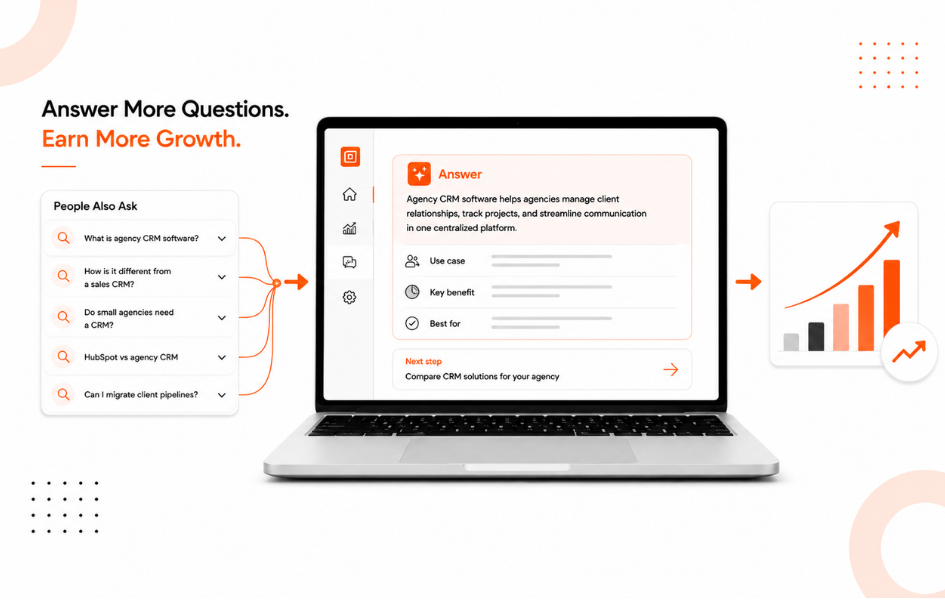
Suppose you manage a CRM built for agencies. One cluster might include questions like:
- "What is agency CRM software?"
- "How is it different from a sales CRM?"
- "Do small agencies need a CRM?"
These questions belong on a category or use-case page to help build topical authority. They should not be buried inside a random blog post where they lose their impact.
Another cluster might focus on questions like:
- "HubSpot vs agency CRM"
- "Can I migrate client pipelines?"
This group is usually better suited for a comparison or migration page.
If you want a practical overview of how these questions reveal specific long tail intent, this Hike SEO explainer is a solid refresher.
The takeaway is simple: not every question deserves its own unique page. Most questions just need to find the right home to maximize results.
How to Structure Answer-First SaaS Pages
Collecting questions is the easy part. The real content creation effort lies in turning those queries into pages that rank and convert.
Most teams make one of two mistakes. They either write fluffy introductions before answering anything, or they stuff a dozen weak questions into a footer FAQ and hope Google figures it out.
It will not.
Effective content optimization requires a simple and disciplined structure to win more search real estate.

First, use the exact People Also Ask question, or a close natural version, as a heading. This immediately signals relevance to both users and search engines.
Second, provide a direct response within the first sentence or two to improve featured snippet opportunities. Avoid throat-clearing phrases like "before we get into that" and just provide the answer.
Third, expand with helpful content that delivers actual value. Add a use case, a limitation, or a specific example that connects the answer to workflow, team size, pricing models, implementation time, or ROI.
Fourth, link the reader forward. If the question is early-stage, guide them toward a related guide. If it is high-intent, direct them to a comparison page, product page, or demo path.
Think of it like packaging. The short answer snippet acts as the label that catches attention, while the rest of the section helps someone make a buying decision.
Success in People Also Ask boxes requires that balance between brevity and depth.
One more thing: do not isolate this strategy to blog posts only. Add answer blocks enhanced with structured data to:
- Feature pages
- Use-case pages
- Alternatives and "vs" pages
- Help center articles
These locations are where a lot of conversion intent lives. When the answer sits on a page already tied to product value, it does more than just win a click.
It moves the reader significantly closer to a signup.
Turn One Answer Into a Bigger Organic System
This is the part most teams miss.
A good People Also Ask answer should not live once and die once. It should support multiple channels across your broader digital marketing ecosystem.
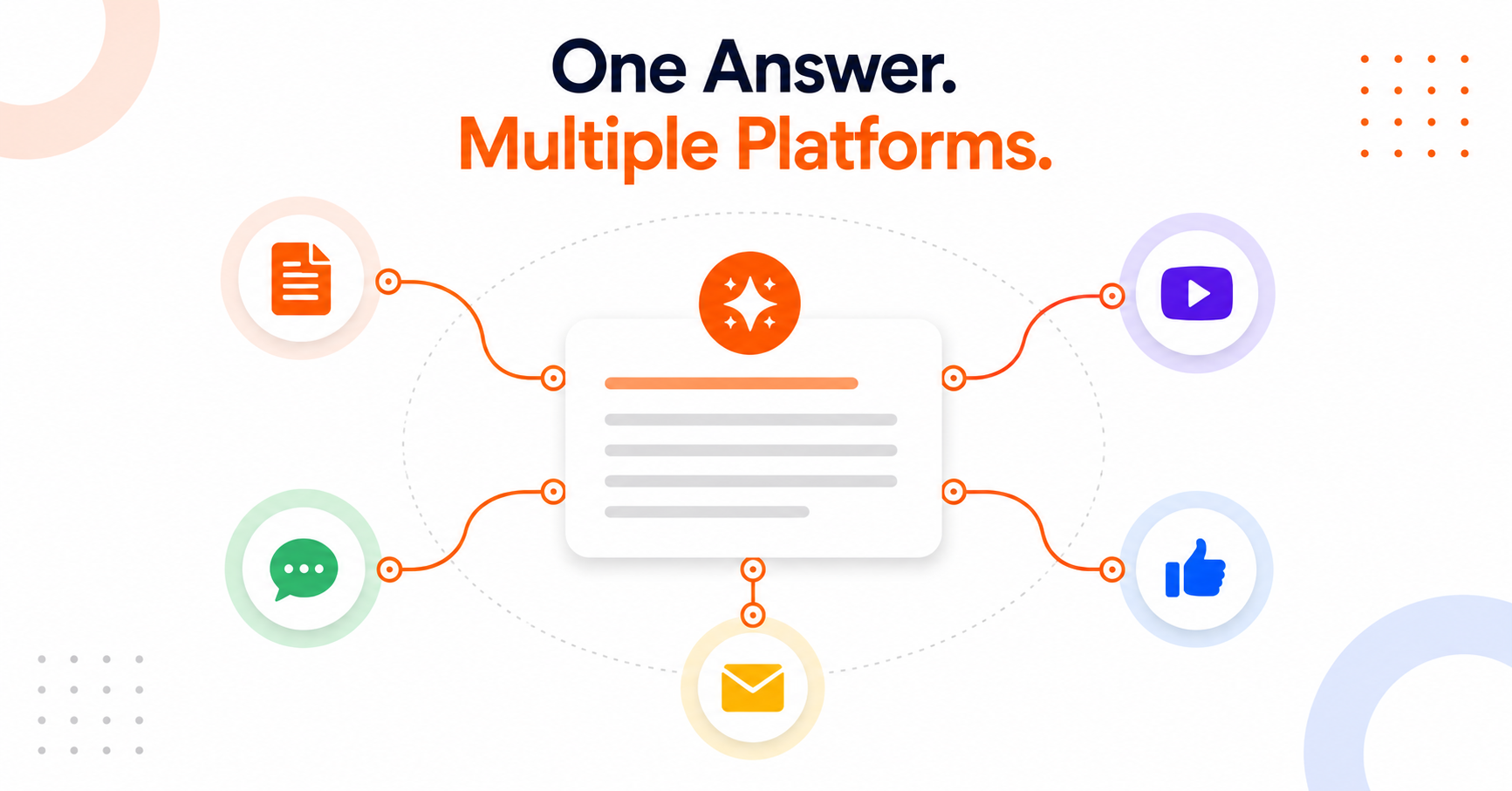
The question you answer on a feature page can also become:
- A support article
- A short LinkedIn post
- A YouTube script
- A source paragraph for AI-driven results
That is where modern organic growth becomes more powerful. Search query data, answer engines, and video content are starting to overlap.
If your company is easy to quote, easy to understand, and easy to trust, you have a better chance of showing up across all of them.
For SaaS brands, this distribution matters. Buyers are not only searching Google with the goal of finding traditional first page rankings.
They are also:
- Checking AI summaries
- Comparing tools in chat-based search
- Watching short product explainers before booking a demo
By optimizing for People Also Ask snippets, you position your brand as the definitive source these different platforms are more likely to cite.
FAQs About People Also Ask Content for SaaS
Here are additional questions you might be curious about:
Is People Also Ask (PAA) Content the Same as an FAQ Page?
No, People Also Ask content is not the same as a standard FAQ page. While standard FAQ pages using question schema can help, SaaS teams usually see better results when People Also Ask content is integrated directly into product, use-case, and comparison pages.
This strategy allows you to capture more SERP features by placing answers where they naturally fit within the user journey.
How Many Questions Should a SaaS Page Target?
A SaaS page should usually target three to six tightly related questions for ranking for PAA. If you try to target more than that on a single page, you risk losing focus and diluting the semantic relevance of your primary topic.
Staying concise helps search engines identify your page as the best source for specific SERP features.
Does People Also Ask (PAA) Content Help With AI Overviews?
Yes, People Also Ask content is highly effective for AI Overviews. Clear, structured answers that utilize question schema make it easier for search engines and AI systems to interpret and cite your site.
By optimizing for a rich snippet feature, you increase the chances that your content will be summarized in AI responses. Focusing on People Also Ask helps your brand maintain visibility as search shifts toward more conversational and intent-based results.
The Real Win Is Better Answers
People Also Ask content is not a trick. It is buyer research hiding in plain sight.
The SaaS brands that win are the ones answering the next relevant question clearly, placing it on the right page, and turning those insights into strategic topic clusters that build long-term visibility.
At Refresh, we help SaaS companies grow through answer-first SEO, AI visibility, and conversion-focused content strategies.
If you want help building that kind of answer-first system across SEO, AI visibility, and video, you can schedule a call with us!
.svg)
