
Comprehensive search engine optimization is the foundation of modern digital marketing for firms, yet it remains expensive to fake. Getting better leads is the part that truly matters for your growth.
A lot of professional services firms invest in search, then wonder why the right prospects still aren't showing up. The problem usually isn't effort. It's focus. If your SEO attracts researchers, students, and bargain hunters, you're building noise, not pipeline.
The fix is simpler than most firms think. You need pages and content built for high-intent leads, trust, and action.
Key Takeaways
- A successful SEO strategy begins with a focus on high-quality lead generation rather than chasing vanity metrics or higher traffic volume.
- Your top services should feature robust core pages backed by helpful content that addresses the specific questions your buyers are asking.
- Creating content around bottom-funnel topics like costs, processes, timelines, fit, and comparisons helps attract better prospects and significantly improves the conversion rate of your website.
- Trust signals carry more weight in professional services than almost anywhere else online.
- Modern search experiences now include AI-generated answers, local listings, and customer reviews in addition to traditional search engine rankings.
Why Most Firms Get Traffic but Not Leads
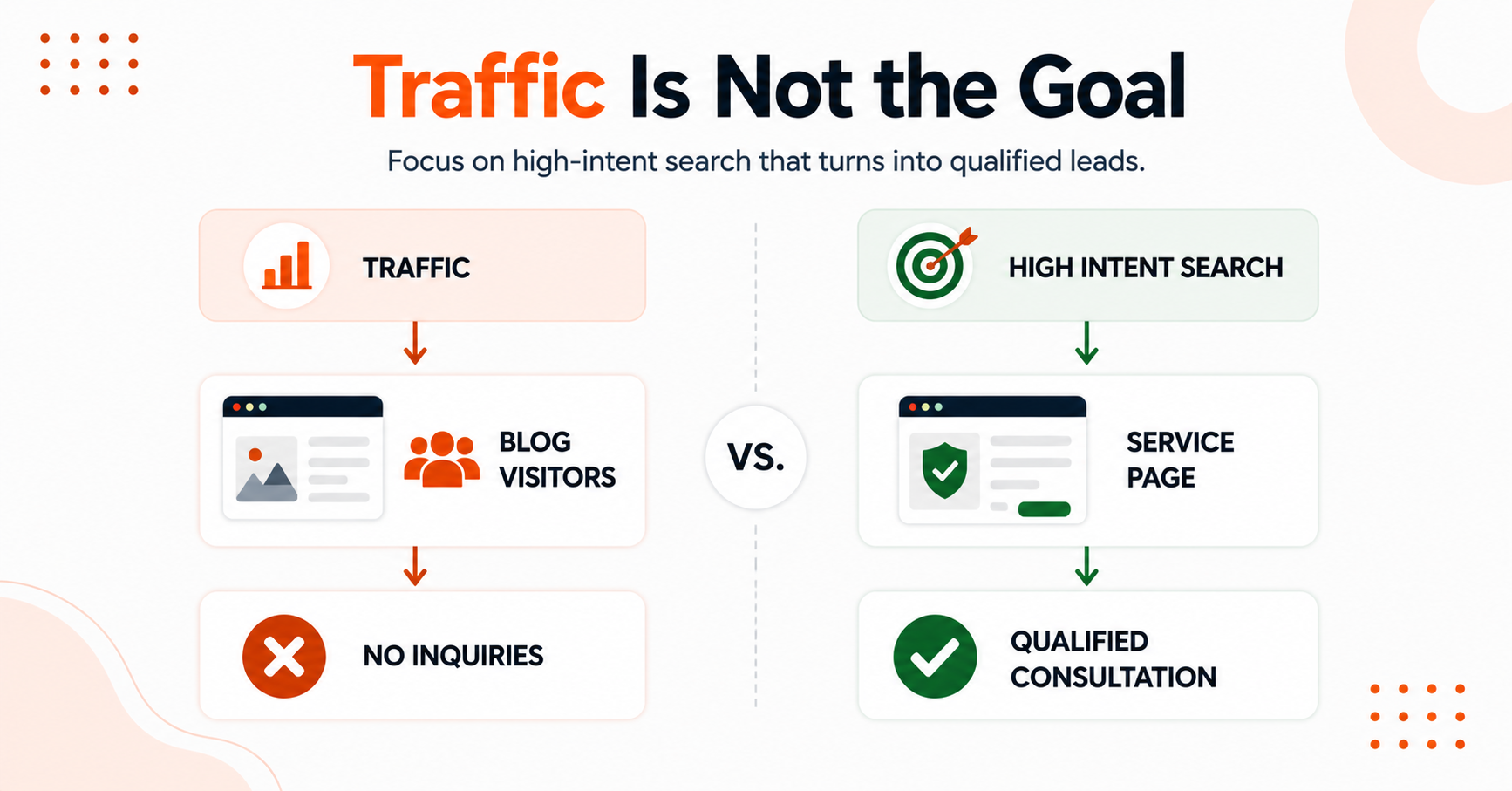
Most firms do not have a search visibility problem. They have a matching problem. Their pages do not match what a ready-to-hire buyer is searching for when they need professional services.
They talk about how someone hires a law firm, accounting firm, consulting firms, or other B2B advisory teams. They do not stay in research mode for long. They search by:
- Service
- Industry
- Location
- Cost
- Timeline
- Risk
- Fit
They want clarity fast, and they want a reason to trust you.
That is why a strong SEO strategy for professional services firms does not start with blog volume. It starts with the services that drive revenue and the questions buyers ask right before they reach out.
Broad traffic can still help, but it is secondary. Your organic search performance is about much more than just raw traffic numbers.
A post with 5,000 visits and zero serious inquiries is a vanity project. A page with 80 visits and three qualified consultations is doing its job.
Search is also changing. Buyers now see review sites, Google Business Profiles, AI summaries, and direct answers before they ever click through.
If your content is vague, or if poor user experience and slow page speeds discourage visitors, you lose that visibility before the visit even happens.
For a wider look at how SEO fits into a real growth mix, Hinge's guide to online lead generation techniques for professional services firms is a useful benchmark.
What a Better SEO Strategy Looks Like
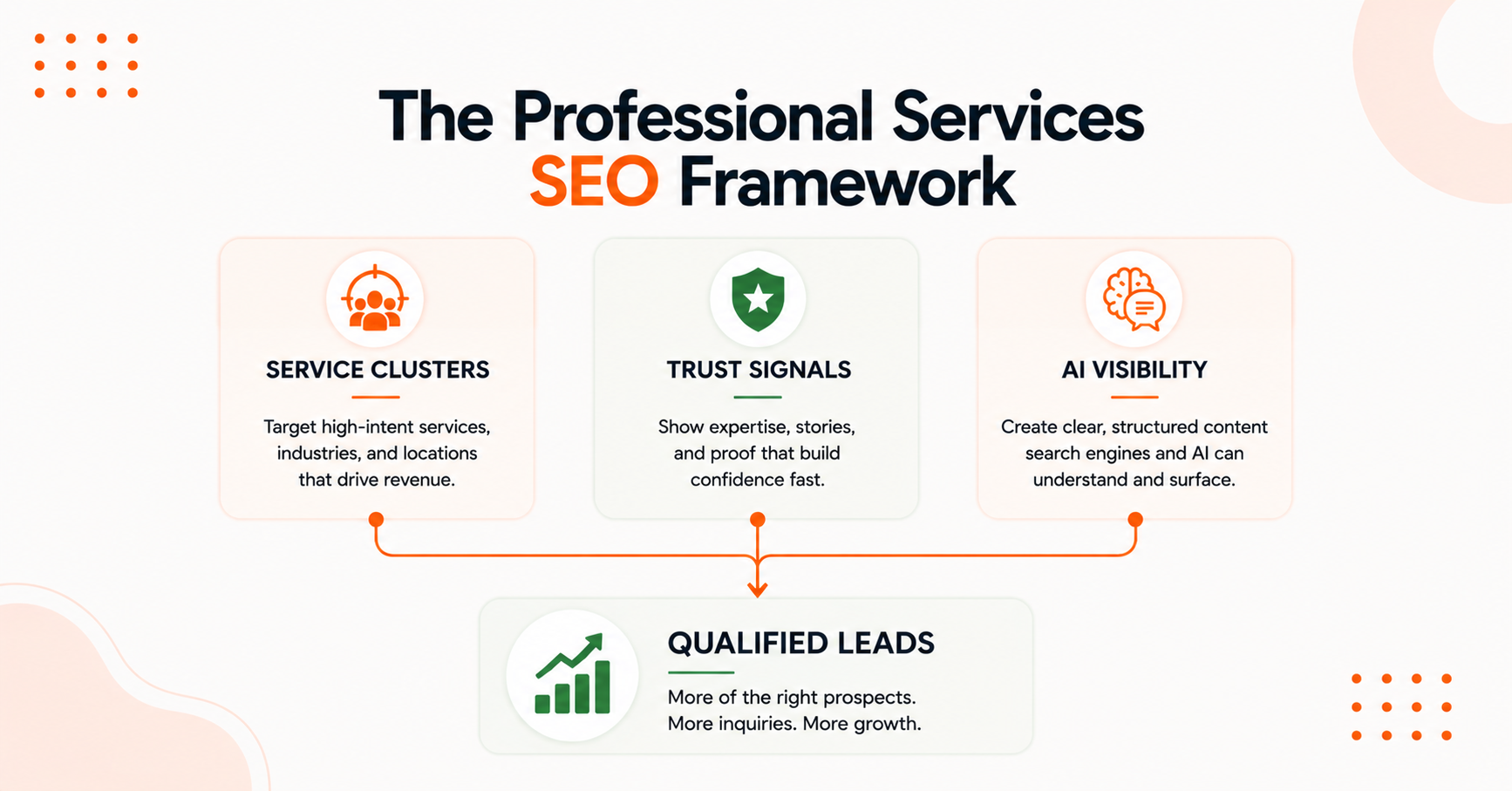
What does the right setup look like? Three things:
- Tight service clusters
- Trust on every page
- Content that search engines and AI systems can understand quickly
A simple way to think about it: wider search visibility should narrow into qualified leads.
Start With High-Intent Service Clusters
The process begins with thorough keyword research to identify what your ideal clients are actually typing into search engines.
Once you have your data, focus your on-page SEO by picking your top three services and building one strong page for each. Support these pages with content covering:
- Cost
- Process
- Timeline
- Common objections
- Comparisons
- FAQs
If the search demand is there, build pages around service plus industry and service plus location. That matters for firms with niche expertise or regional reach.
"Business valuation for dental practices" is stronger than "business valuation services." So is "estate planning attorney in Denver" if local intent is clear.
This is where a lot of firms get boxed in. They publish general thought leadership and skip the commercial pages that turn interest into inquiry.
You need both, but the money pages come first.
Build Trust Into Every Page
Professional services are trust purchases. People are not buying a product off a shelf; they are hiring judgment. You must demonstrate professional authority by featuring:
- Partner bios
- Credentials
- Detailed case studies that prove your effectiveness
Your pages need to cultivate trust, fast. Showcase testimonials, reviews, and examples of outcomes to help prospects understand:
- Who you help
- What the engagement looks like
- How long it usually takes
- Who is or is not a fit
If a page ranks but does not build confidence, it will not bring better leads. Short FAQ sections help here too. They answer objections, tighten the page, and make your expertise easier for search engines and AI tools to interpret.
That is a big deal in 2026, when more discovery happens inside answer engines and AI overviews.
Write so Search and AI Can Quote You
Clear headings, direct answers, and strong internal page structure are the foundation of your approach.
Beyond content quality, you need a solid foundation of technical SEO, including correct schema implementation and reliable mobile responsiveness, to ensure your site performs well across all devices.
You do not need fluffy content. You need useful, answer-first material written in plain English.
That includes pages on:
- Pricing
- Process
- Timelines
- Risks
- Alternatives
- Who this is best for
These topics often convert better than broad educational posts because they catch buyers closer to a decision.
It also helps to build authority outside your site. Strategic link building is essential, as acquiring quality backlinks from reputable industry sources validates your site in the eyes of search algorithms.
These off-site signals improve your overall search visibility. Rebus has a practical overview of lead generation for professional services firms that supports that broader view of combining high-quality content with.
Measure Lead Quality, Not Pageviews
Once the content is live, do not grade success by traffic alone. That is how firms keep funding SEO that looks busy but fails to generate results.
To truly understand your performance, you must use data analytics to connect search behavior to actual business outcomes.
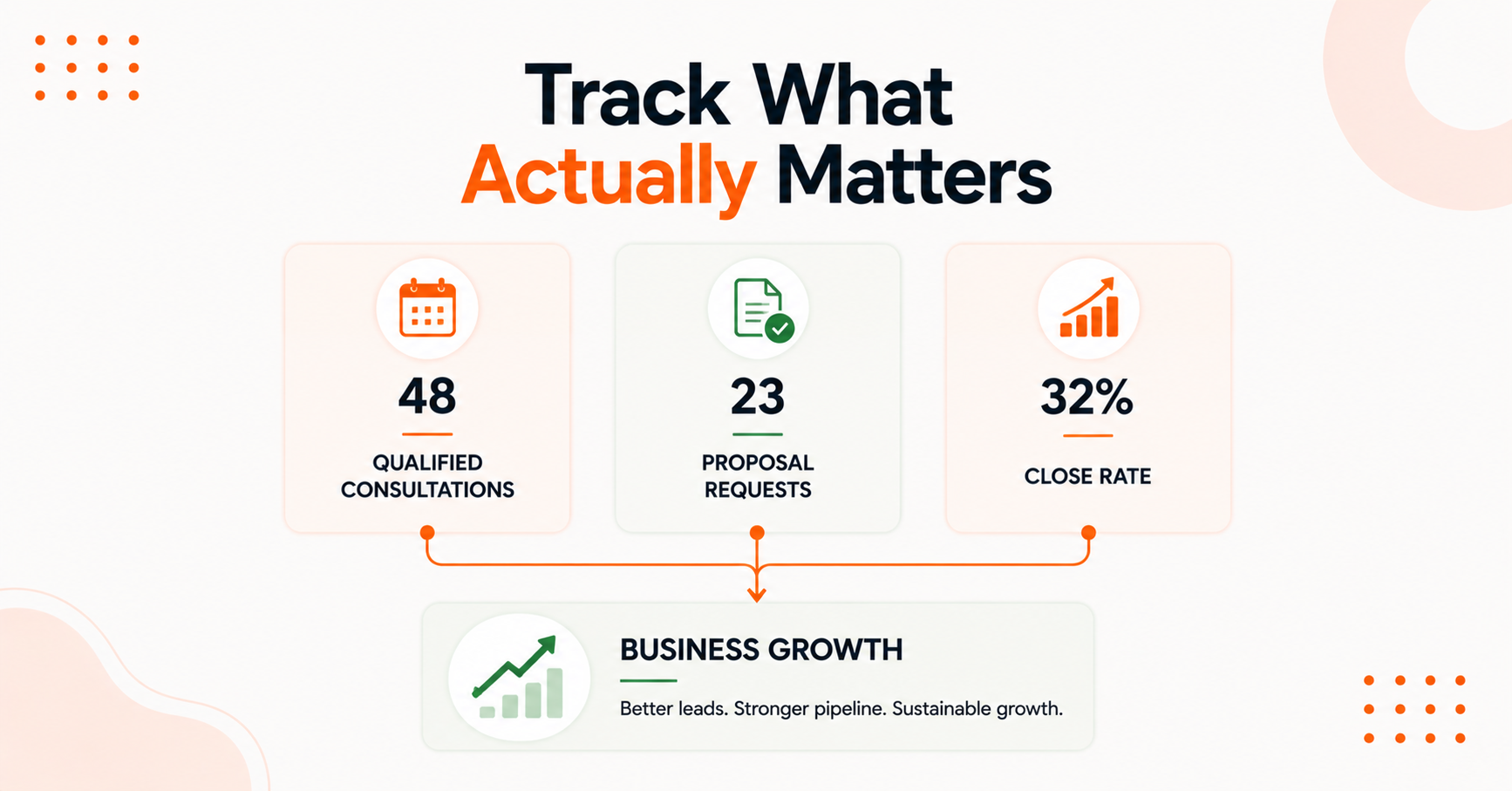
These metrics tell a better story:
MetricWhy It MattersQualified consultationsShows intent and client fitProposal requestsConnects search directly to your pipelineClose rate by landing pageReveals which topics attract serious buyers
Review these metrics monthly to evaluate the ROI of your marketing efforts. Cut topics that attract the wrong audience, and expand the pages that drive high-quality conversations.
If you serve a local market, keep your Google My Business profile, client reviews, and location pages current to build local authority.
Beyond search, leverage your LinkedIn presence to bolster professional credibility and nurture network-based leads that align with your organic search strategy.
The broader objective is clear: paid traffic is rented, but organic visibility is a long-term asset. A well-optimized page can keep bringing in the right leads long after it goes live.
FAQs
Below are additional questions that might help you.
How Long Does SEO Take for a Professional Services Firm?
How Long Does SEO Take for a Professional Services Firm?
Most firms start seeing meaningful movement in a few months, but better-fit lead flow usually takes longer. The timeline depends on competition, site quality, authority, and how fast you publish the right pages.
Should We Focus on Blog Content or Service Pages First?
Service pages should come first, almost every time. Blog content helps, but it should not come before the pages that explain what you do, who you help, and why someone should contact you.
Do AI Overviews Change SEO for Professional Services?
Yes, AI overviews change SEO for professional services by making content clarity and structure even more important. Your content needs to be clearer, more structured, and easier to quote.
To rank well, you must demonstrate genuine expertise and establish authority within your niche. Direct answers, strong FAQs, proof, and clean page architecture matter more now.
What Content Usually Brings the Best Leads?
Bottom-funnel topics usually bring the best leads. Think cost, timeline, process, comparisons, common mistakes, risks, and fit.
Creating these pages is a fundamental part of an effective search engine optimization plan for B2B firms. These topics attract people who are closer to hiring, not just browsing for information.
It's Time for You to Have a Strong SEO Strategy
Better leads do not come from simply publishing more content. They come from tighter search intent, stronger social proof, and pages specifically designed to convert visitors.
A truly winning content strategy balances local SEO efforts with a broader national reach to ensure you are connecting with the right clients at the right time.
If your firm wants organic visibility that compounds over time, you must focus on building a sustainable SEO strategy that acts as a long-term asset rather than chasing temporary spikes in traffic. By prioritizing high-value growth for professional services, you ensure that your digital presence works as hard as your team does.
If you want help refining your approach across SEO, AI visibility, and video, schedule a call now!


