
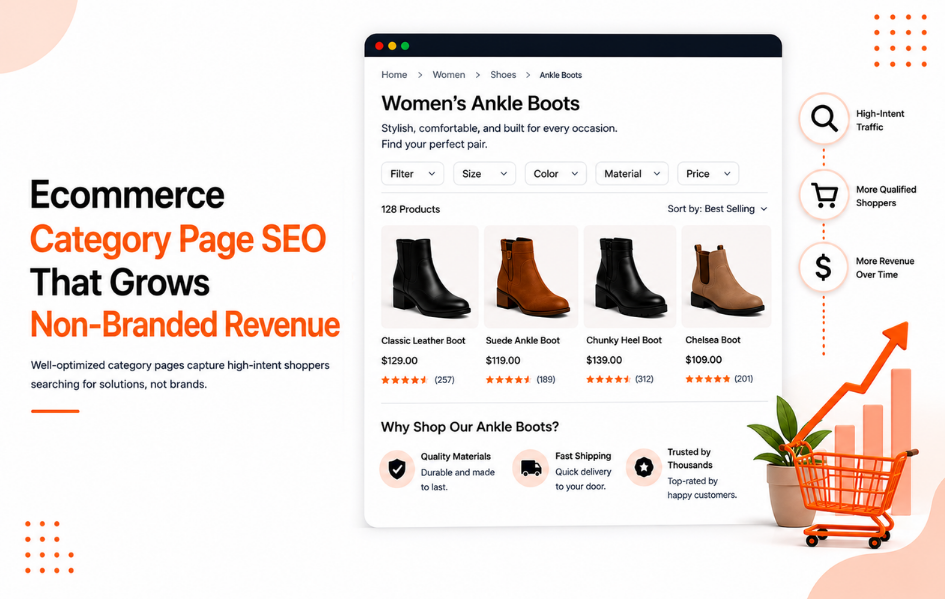
If your category pages only rank for your brand name, you are capping your upside and limiting the flow of high-quality organic traffic to your site.
The real revenue growth comes from generic searches. These are the queries shoppers use when they are exploring options but have not yet identified their preferred brand.
This is why effective ecommerce category page SEO matters so much. When you optimize these pages to align with specific search intent, they do more than pull in raw traffic. They attract buyers who are ready to make an informed decision.
Let's explore the strategies that make these pages work for your business.
Key Takeaways
- Category and collection pages are often the most effective assets for capturing high-intent, non-branded search traffic.
- Your site hierarchy should be aligned with actual search demand rather than internal organizational naming conventions.
- Thin pages rarely rank. High-performing pages must improve the user experience by helping shoppers compare products, apply filters, and move confidently toward a purchase.
- Technical optimization is critical for ecommerce sites, particularly when managing faceted navigation and preventing index bloat from duplicate content.
- Top-ranking category pages compound in value over time, which is why organic growth remains a more sustainable strategy than paying for every click through advertisements.
Why Category Pages Drive Non-Branded Revenue
A product page is usually too narrow for broad commercial searches. A blog post can bring awareness, but it often sits one step too early in the customer journey.
Category pages hit the sweet spot because they align perfectly with user search intent.
They match how people shop. Someone searching for women's black ankle boots is not looking for a brand story; they are looking for options, filters, pricing, and a fast path to the right product.
Because these pages allow you to target specific long-tail keywords, they capture high-intent shoppers who are ready to buy.
This is also why these pages can become serious growth assets.
Paid search is a faucet. Turn it on, traffic shows up. Turn it off, traffic disappears. A well-ranked category page is different.
As these pages accumulate pagerank over time, they keep working, keep earning clicks, and keep driving revenue long after the initial work is done.
Paid traffic rents attention. Strong category pages build an asset.
If you want a second opinion on their importance, Digital Commerce's category-page analysis makes the same point in plain terms. These are often the highest-leverage pages on the site.
Start With Search Demand, Not Your Catalog
Here is where a lot of ecommerce teams go wrong.
They build category pages around internal naming, supplier language, or whatever sounded organized in a spreadsheet. Google does not care about your spreadsheet. Your customers do not either.
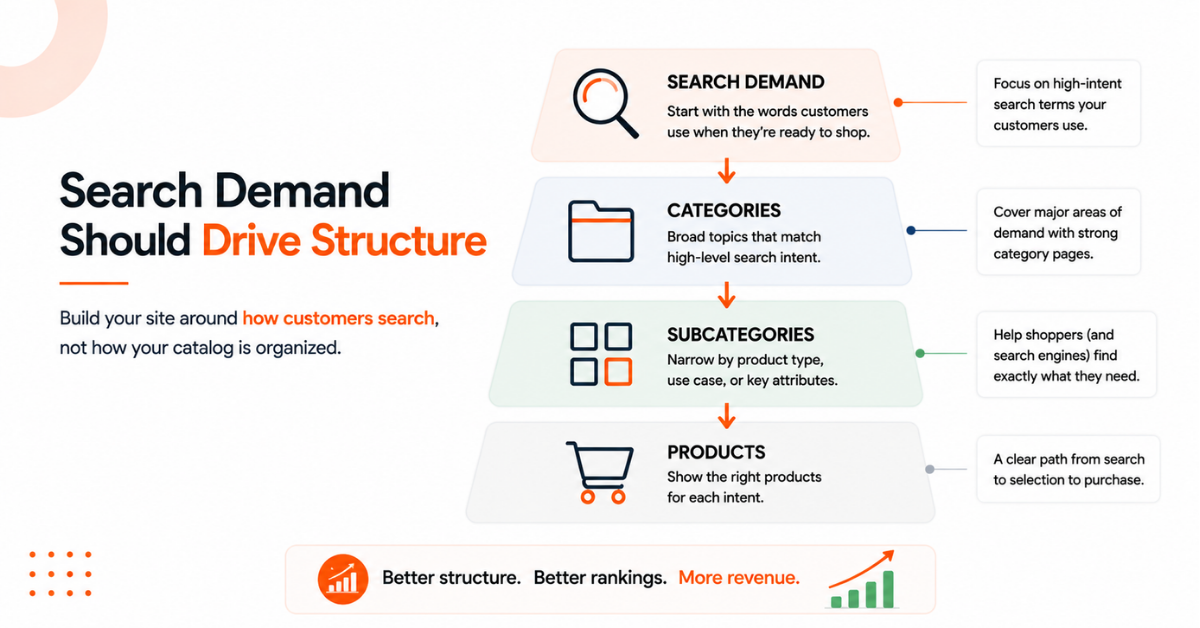
Start with the phrases people use when they are ready to shop. Focus on high-intent long-tail keywords rather than internal jargon.
For example:
- "ceramic planters," not "home styling vessels"
- "men's trail running shoes," not "outdoor performance footwear"
If the page name does not line up with search demand, you are making ranking harder than it needs to be.
Then map that demand to the right page type.
One core query cluster should have one clear primary page. Do not let a blog post, a product listing page variation, and three filter URLs fight over the same term.
That is how sites suffer from keyword cannibalization and stall out in the rankings.
Your site hierarchy matters, too.
Parent categories should target broader demand, while subcategories should narrow the focus by product type, use case, or a meaningful attribute. These subcategories help users, search engines, and increasingly AI systems that summarize shopping options.
One more thing: faceted navigation can wreck this fast.
If every filter creates a crawlable page, you get bloated indexation and a messy URL structure that wastes your crawl budget. Keep only high-value filtered pages indexable.
The rest should consolidate back to the main category page.
Build Pages That Help People Choose
A ranking page that does not convert is a vanity project. You want to prioritize both SEO and conversion rate optimization to see real results.
That starts with the technical basics. This means optimizing your title tags and H1 tags for relevance, placing helpful introductory copy near the top of the page, and establishing clear internal context through breadcrumbs.
These breadcrumbs help both users and search engines navigate your site architecture effectively. For a practical look at those foundational elements, Uproer's category page checklist is a solid reference.
But the bigger win is this: make the page useful enough that shoppers stay. Design a product grid that aligns with how your customers shop. Surface key product differences, stock levels, pricing, and social proof like star ratings or reviews.
Add short, supporting copy lower on the page that answers real buying questions rather than fluffy filler written to appease a search engine.
Good category copy does three jobs at once. It tells search engines what the page covers, gives AI answer systems better context, and helps humans choose products faster. Ultimately, this approach improves the overall user experience.
Your content should sound like a smart sales associate, not a keyword soup disaster. Talk about materials, fit, sizing, use cases, compatibility, or common tradeoffs.
If people repeatedly compare lightweight versus durable options or beginner versus pro models, provide that guidance directly on the page.
Technical quality is also critical. Prioritizing mobile responsiveness and fast page load speed is non-negotiable. Additionally, ensure you manage canonical URLs correctly and implement schema markup or structured data to help search engines display rich snippets in the results.
These elements all support the main goal: make the category page the obvious result for the query and the easiest path to purchase once someone lands there.
Treat Winning Pages Like Growth Assets
The first version of a category page is rarely the final version, and that is perfectly fine. The teams that win keep improving the pages that already show signs of life.
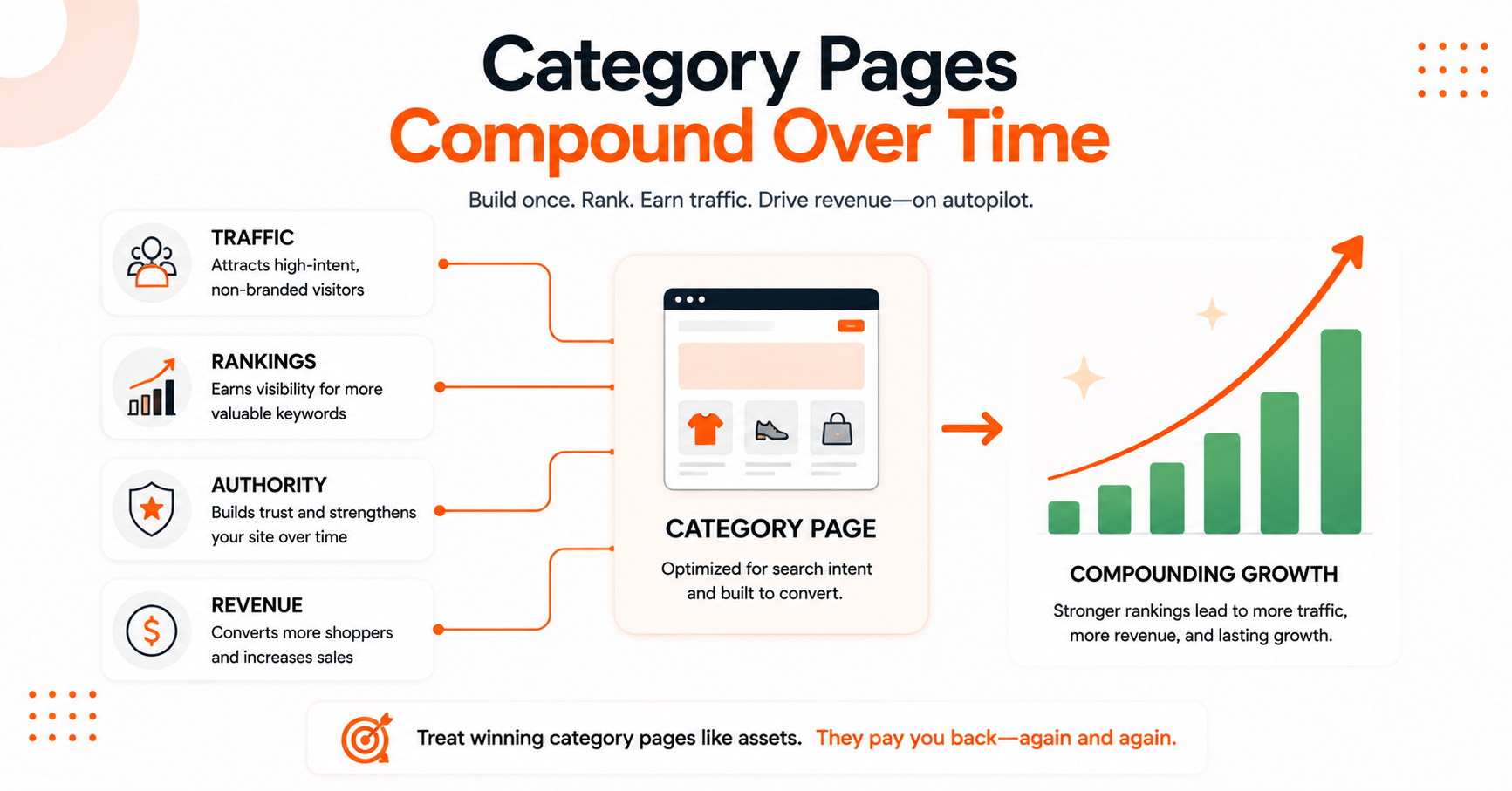
Watch non-branded impressions, clicks, category-level revenue, and assisted conversions. If a page is stuck on page two, small upgrades can move the needle fast. Tighten the copy, improve the product mix to better serve the user experience, and expand the FAQ section.
Strategic internal linking from related collections and helpful guides can also provide a significant boost. Furthermore, testing stronger titles and meta descriptions can help improve your click-through rates. By prioritizing smart internal linking, you ensure that search engines and visitors can easily navigate between your most valuable assets.
This is long-game work, and that is the point. Every improvement stacks. Every stronger page increases your visibility, your authority, and your margin on future traffic.
FAQs About Ecommerce Category Page SEO
Here are additional questions you may be curious about.
How Much Text Should a Category Page Have?
Include enough text to add context and help someone make an informed purchase.
For most pages, that means a short, sharp piece of introductory copy near the top, followed by more helpful content lower on the page. You should avoid crowding the user experience by placing 800 words above your product grid.
Should Filtered Category Pages Be Indexed?
Only index these pages when there is real search demand and the page can stand on its own.
While faceted navigation can lead to thousands of URLs, you should only index those that target valuable queries. If a filtered page lacks sufficient unique content, it is better to fold those signals back into the main category page or relevant subcategories to avoid diluting your site wide pagerank.
Always ensure your URL structure remains clean and easy for crawlers to navigate.
Can Category Pages Outrank Product Pages for Generic Searches?
Yes, and they usually should.
Broad commercial queries often align better with category search intent than the specific focus of a single product page. By leveraging internal linking, you can signal to search engines that your category pages are the authority hubs for these broad terms.
You should reserve your product pages for specific model, SKU, or product name searches, while letting your category pages do the heavy lifting for generic industry terms.
Your Next Sale Might Start on a Category Page
Non-branded growth usually does not come from a clever homepage or another ad campaign. It comes from category pages that align with user search intent and make it easy for shoppers to find the right products.
When you prioritize ecommerce category page SEO, those pages become long-term assets that continue driving organic traffic and revenue over time.
If you want help building that kind of growth engine, book a call with Refresh and explore where your biggest opportunities may be.


