
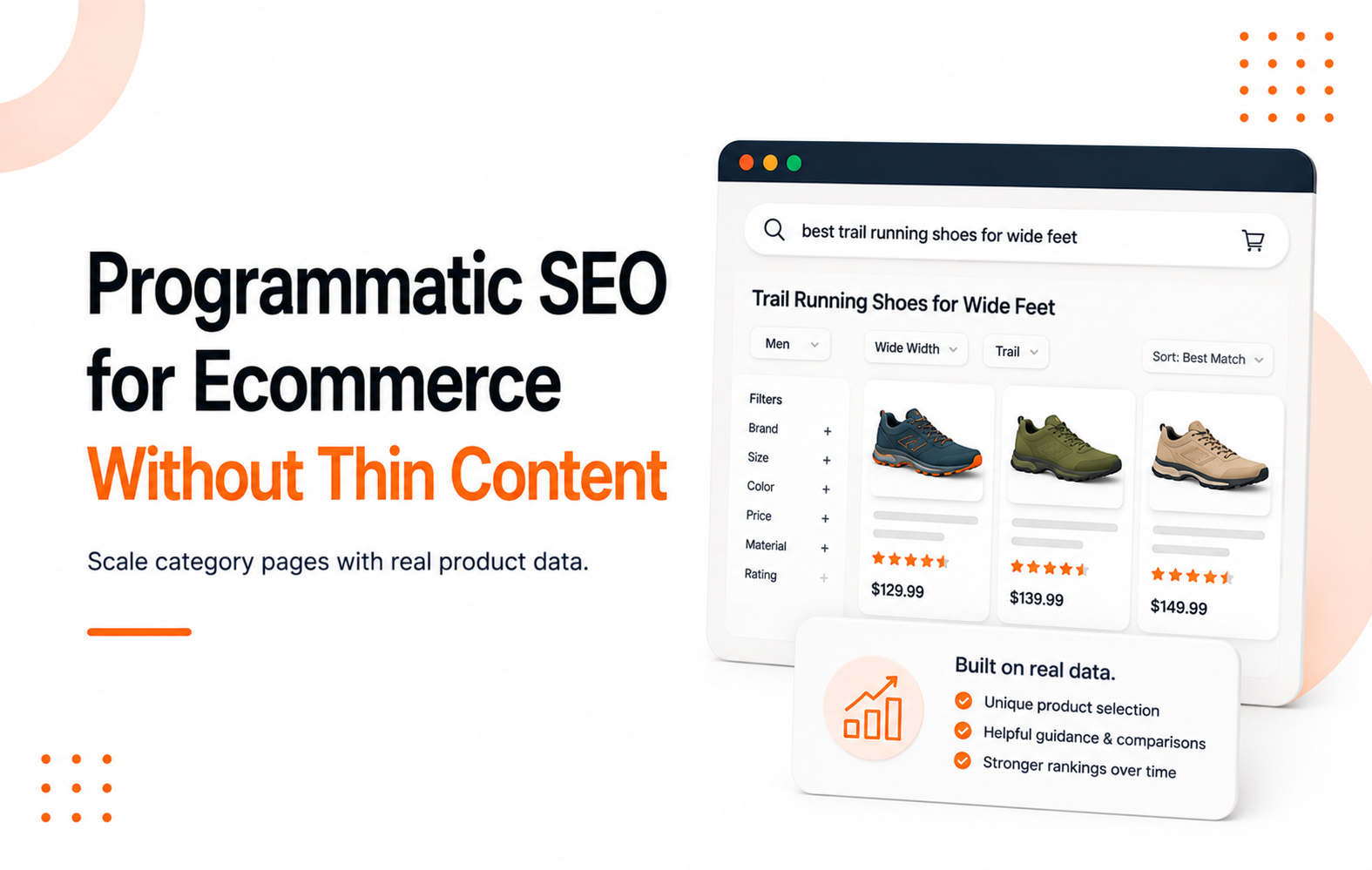
Most e-commerce stores do not fail with programmatic seo ecommerce because they scale too fast. They fail because they publish pages that say almost nothing.
That is the real issue. If 5,000 pages read like the same page with one word swapped, search engines do not trust them, the user experience suffers, and shoppers move on to other e-commerce stores.
The fix is not to publish less. It is to build pages that earn their place by providing genuine value that search engines can recognize and reward.
Key Takeaways
- Programmatic SEO for ecommerce is effective when pages leverage real product catalog data to address specific search intent.
- Each page must serve a clear purpose, whether that is helping a shopper compare products, choose a solution, or find the right fit for their needs.
- To satisfy search engines and improve rankings, avoid thin content and duplicate content that often arise from indexable filters and weak templates.
- Strong page sets compound over time because they build authority, establish trust, and drive consistent organic traffic.
Why Most Ecommerce Programmatic SEO Fails
This is where many e-commerce stores go wrong. A brand exports a keyword list, maps it to filters, and launches thousands of landing pages.
Color plus size plus material plus brand. All indexable, all thin, and all competing with each other.
These low-value landing pages rarely perform well because they offer no unique value to the user.
That is not scale. It is clutter.
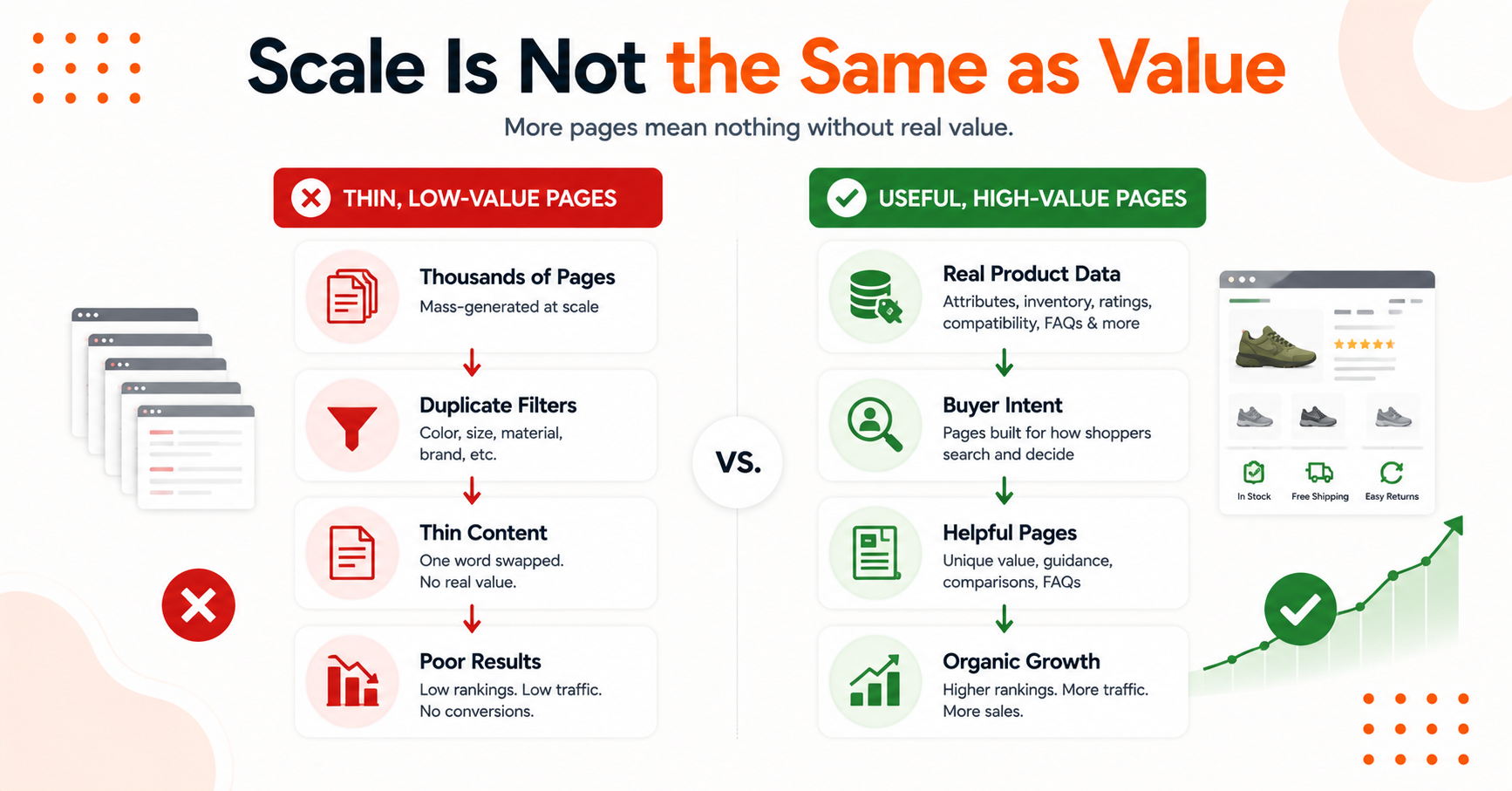
In 2026, search visibility is shifting toward pages with clean structure, useful product data, and obvious intent. Targeting long-tail keywords still works, provided those pages have a real reason to exist.
That means distinct product mixes, unique shopper questions, real comparisons, and a page experience that helps someone move closer to a purchase. Improving search visibility requires moving beyond generic results and addressing long-tail keywords with precision.
A quick gut check makes the difference obvious:
Thin PageUseful PageOne keyword swapA distinct use case or categoryGeneric intro copySpecific buying guidanceNo proof or contextSpecs, reviews, FAQs, comparisonsOrphaned URLStrong internal linking
The biggest red flag is a mismatch in search intent. If someone searches for "best trail running shoes for wide feet," they do not want a random filtered page with twelve products and boilerplate text.
They want curation. They want tradeoffs. They want help.
That is why strong programmatic systems start with page types, not page counts. For a solid example of intent-led planning, this breakdown of programmatic ecommerce category pages is worth reading.
What to Build Instead
The sweet spot is simple. Use page templates for structure, then feed them real information through automation tools.
That can include:
- Product attributes
- Compatibility data
- Ratings
- Price ranges
- Inventory status
- Materials
- Sizing notes
- FAQs
- Curated selections from your product catalog
When these data sources change the page in a meaningful way, the page stops feeling mass-produced. It starts feeling useful.
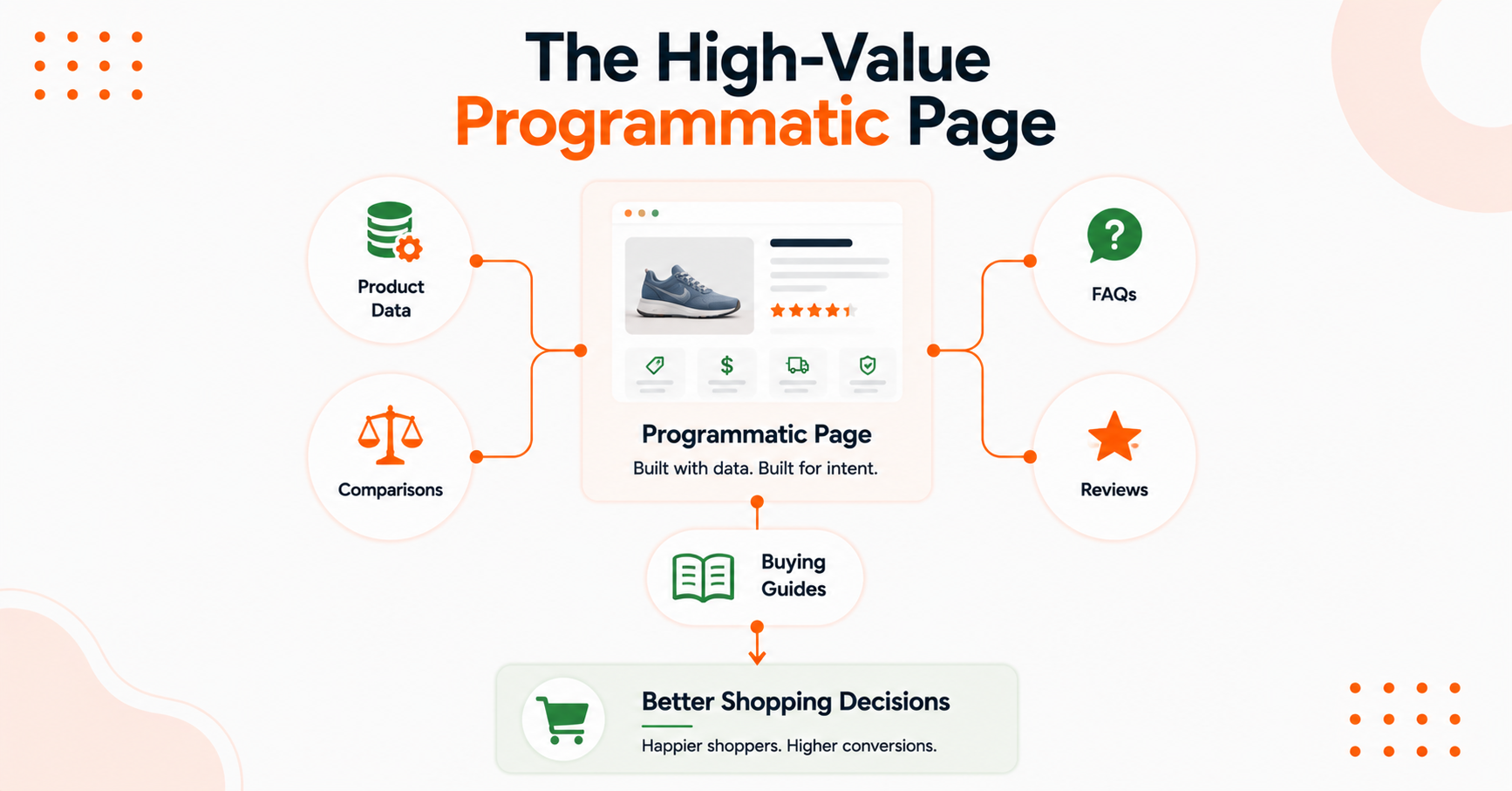
A strong programmatic approach to landing pages usually relies on five things:
- A tight introduction that frames the category or use case in plain English.
- A product set that matches the promise of the page.
- On-page elements that add original value, such as fit advice, use cases, pros and cons, or comparison tables.
- FAQ sections that answer buyer questions before conversion.
- Internal linking from parent categories and supporting guides.
Notice what is missing: bloated filler copy.
You do not need 800 words of fluff on every product page. You need enough text to add context, followed by modules that help people choose.
For many brands, that means using flexible page templates with a concise introduction near the top and stronger supporting content lower on the page.
Structured data matters too. While it will not rescue a weak page, it helps search engines understand your content.
When combined with accurate meta tags, structured data helps AI systems and crawlers correctly interpret products, reviews, FAQs, breadcrumbs, price, and availability. Clean data sources and well-organized information matter more than ever because discovery is no longer limited to standard blue links.
How to Scale Without Letting Quality Drop
The best template in the world will not fix bad inputs, so establish firm rules before you scale. To build scalable content successfully, prioritize quality over sheer volume.
Do not index product pages with thin inventory, and avoid publishing URLs that lack meaningful differences. If a page lacks depth or fails to provide unique value, keep it out of the index until it earns its place.
This is where experienced operators win. You need page thresholds and content rules to manage programmatic content effectively.
Track metrics such as:
- Non-branded impressions
- Indexed page quality
- Assisted conversions
- Organic traffic
Page count is a vanity metric. Revenue quality is what matters.
Using the right automation tools can help maintain these standards across your product catalog while supporting your expansion strategy.
The structure that helps pages rank also matters for AI search engines. AI overviews pull from programmatic content they can parse quickly.
Clear headings, direct answers, strong entity signals, and trustworthy product data help your brand appear earlier in the discovery process. On the operational side, governance of page templates matters more than clever copy.
Maintain one source of truth for product attributes and refine your keyword research to ensure each page adds value. Robust schema markup is equally important because it helps crawlers understand your offerings and supports long-term visibility.
As you scale, keep the user experience at the center of the process. Review new batches of programmatic content to ensure they provide consistent value.
Merge cannibalizing URLs before they become a problem, and remember that paid traffic is rented. A clean library of high-quality, scalable content is an asset that continues working over time.
Finally, remember that your meta tags and structured data form the foundation of your site. By refining page templates and leveraging smart content automation, you can maintain high standards across thousands of product pages.
Successful content automation is ultimately about balancing volume with the depth required to satisfy both shoppers and search engines.
FAQs About Programmatic SEO Ecommerce
Below are answers to some of the most common People Also Ask questions.
Can Small Ecommerce Brands Use Programmatic SEO?
Yes, small ecommerce brands can use programmatic SEO if their catalog has real variation and genuine buyer demand. You do not need thousands of pages to succeed.
Instead, you need the right landing pages built around how buyers search. By using smart keyword research, e-commerce stores can identify niche opportunities where long-tail keywords provide a clear path to ranking.
Well-structured page templates allow you to scale efficiently while ensuring every page addresses specific search intent.
How Much Unique Content Does Each Page Need?
Each page needs enough unique content to help a user make an informed decision. This often includes a concise introduction, a distinct product mix, a comparison module, user reviews, and a helpful FAQ section.
Unique content is not about word count alone. When keyword research uncovers relevant long-tail keywords, you can create useful content that aligns with search intent, which is exactly what search engines want to see.
Should Filter Pages Be Indexed?
Some filter pages should be indexed, but most should not. Only index filtered pages when they align with proven search volume, stable inventory, and a clearly different purpose than the parent category.
Keyword clustering can help determine which filters deserve their own URLs. From a technical SEO perspective, avoid cluttering your site with empty or low-value pages.
Focus on indexable filter pages that target meaningful long-tail keywords because they provide the most value to both users and your overall site structure.
Build Programmatic SEO Pages That Scale and Convert
Programmatic SEO for ecommerce works when every page has a purpose and enough substance to fulfill it. Better data, stronger structure, and clear search intent create a higher-quality experience that benefits both shoppers and search engines.
As your catalog grows, the goal is not simply to publish more pages. It is to build pages that help customers make confident buying decisions while earning long-term search visibility and organic traffic.
That is the approach Refresh helps ecommerce brands implement. Refresh is a digital marketing agency focused on building sustainable SEO strategies that balance scale, quality, and performance.
If you are expanding a product catalog and want to avoid thin content dragging your site down, schedule a call with us. A strong system compounds over time, while a weak template only multiplies your problems.


